Kitchen Equipment · 4 November 2026 · 10 min read
Top Rated Food Processors in the UK: A Chef's Pick for 2026
A chef's guide to the best food processors you can buy in the UK, from the Magimix 4200XL to compact and budget machines, with what each does well, who it suits and what to look for before you buy.
By James Callery, Private Chef and Head Chef, Hotel du Vin Winchester
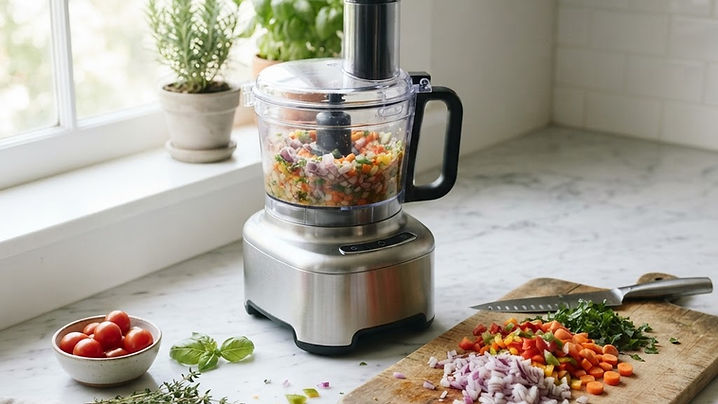
I've cooked with a food processor almost every working day of my career, from the heavy steel bowl cutters in hotel kitchens to the compact machines I use at home and carry to private dinners. A good one saves you hours of knife work on pastry, pesto, breadcrumbs, purées and slaws. A bad one leaves half the onion whole and the other half as mush.
I've used every machine on this list. Below are the eight I'd recommend in the UK right now, from a chef's point of view: what each one does well, where it falls short and who it suits. The specifications come from the manufacturers and UK retailers. Prices change constantly, so I've grouped them by budget rather than quoting figures.
The top rated food processors at a glance
| Food processor | Best for | Bowl | Power |
|---|---|---|---|
| Magimix 4200XL | Best overall | 3 litres, plus two nesting bowls | 950W |
| Sage the Paradice 16 | Serious home cooks and big batches | 3.6 litres | 900W |
| KitchenAid 3.1L (5KFP1319) | Dicing and adjustable slicing | 3.1 litres | 400W |
| Ninja Detect Power Blender & Processor Pro (TB401UK) | A blender and processor in one | 1.8 litre bowl, 1.9 litre jug | 1200W |
| Kenwood MultiPro Go | Small kitchens | 1.3 litres | 650W |
| Cuisinart FlexPrep 1.1L | Small jobs and a tight budget | 1.1 litres | Compact |
| Russell Hobbs Desire | Best budget full size | 2.3 litre bowl, 1.5 litre jug | 600W |
| Robot-Coupe R 2 | The professional's choice | 2.9 litre stainless steel bowl | 550W |

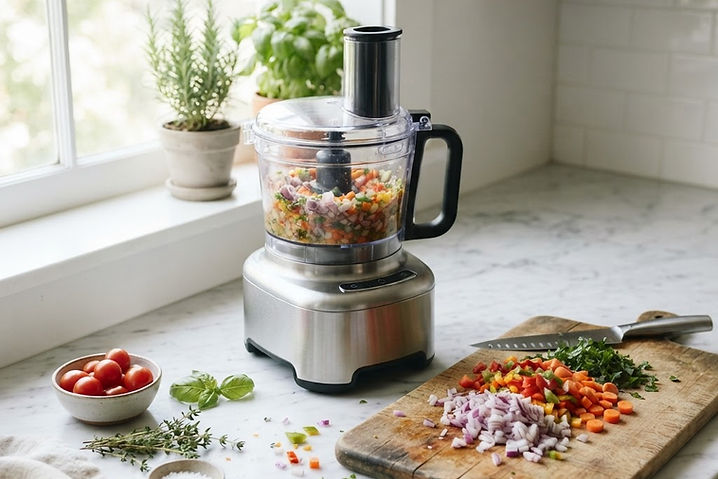
A good food processor takes the repetitive knife work out of prep
1. Magimix 4200XL: best overall
If someone asks me which food processor to buy and they cook properly at home, this is usually my answer. The Magimix 4200XL has a 950W motor and a 3 litre main bowl, with a midi and a mini bowl that nest inside it, so you can make a small batch of mayonnaise or chop a couple of shallots without scraping them off the sides of a big bowl.
It comes with stainless steel blades, 2mm and 4mm grating discs, 2mm and 4mm slicing discs, a dough blade, an egg whisk and a BlenderMix ring for soups and smoothies, plus a storage box for the discs. There's one speed, and the motor adjusts itself to the job.
What sets it apart is how it's built. It's heavy, stable and quiet for its power, and Magimix gives a 30 year guarantee on the motor and three years on parts, according to John Lewis's listing.
- Good for: pastry, dough, pesto, slicing and grating in volume
- Watch out for: it's expensive, it's tall, and there's no separate blender jug
- Budget: premium
2. Sage the Paradice 16: best for serious home cooks
The Paradice 16 is the one for people who batch cook, make big family meals or simply love kit. It has a 900W motor and a 3.6 litre (16 cup) bowl, and its party trick is dicing: it comes with 8mm and 16mm dicing attachments that slice and then dice, plus a peeler. The feed chute is wide too, taking food up to 140mm across, so a whole potato or block of cheese goes in without trimming.
Dicing used to be something only professional machines did well. It's brilliant for soffritto, mirepoix, salsas and diced potatoes for a crowd.
- Good for: dicing, peeling and big batches of prep
- Watch out for: it's one of the most expensive machines here, and big to store
- Budget: premium

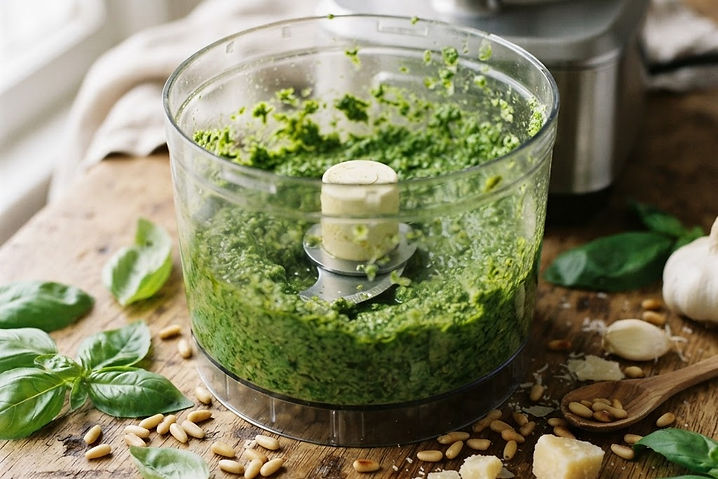
Pesto is one of the best tests of a food processor: you want it chopped, not puréed
3. KitchenAid 3.1L food processor: best for dicing and slicing
The KitchenAid 3.1 litre model (5KFP1319) is a good middle ground. It has a 400W motor, two speeds and a pulse function. In the box you get a stainless steel blade, a dough blade, a reversible fine and medium shredding disc, an adjustable ExactSlice disc that changes thickness without swapping discs, a dicing kit with its own cleaning tool and a storage caddy.
The adjustable slicing disc is the feature I like most. Moving from paper thin cucumber to thicker potato slices for a gratin, without stopping to change discs, makes a real difference on a busy day.
- Good for: gratins, salads, slaws and dicing
- Watch out for: lower wattage than the Magimix, so it works harder on heavy doughs; the guarantee is two years
- Budget: mid to premium
4. Ninja Detect Power Blender & Processor Pro: best blender and processor in one
If you only have room for one appliance and you want smoothies and soups as well as chopping, this is the one. The TB401UK has a 1200W motor base that takes a 1.8 litre processor bowl, a 1.9 litre blender jug and two 600ml single serve cups.
It has a reversible slicing and shredding disc and a dough blade, and Ninja's BlendSense setting adjusts the speed and timing to what's in the bowl. There are 14 manual speeds and six auto modes, including large chop, small chop and mince.
- Good for: soups, smoothies, sauces and everyday chopping
- Watch out for: a smaller processor bowl than the full size machines, and only one disc
- Budget: mid range

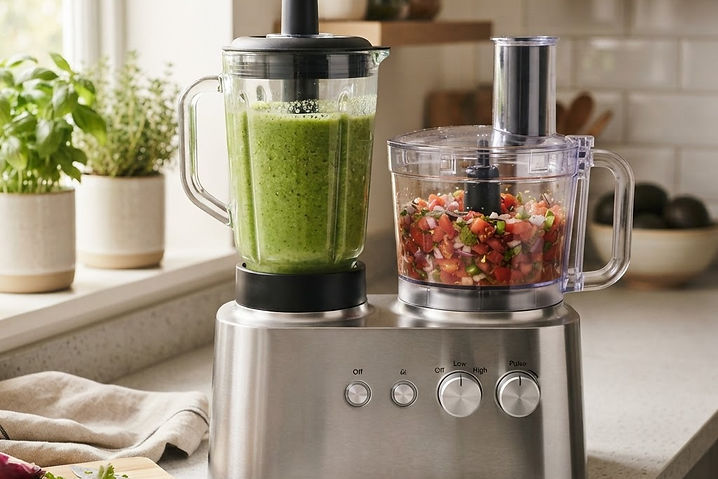
A combination machine covers smoothies and soups as well as chopping
5. Kenwood MultiPro Go: best for small kitchens
The MultiPro Go is a proper food processor shrunk to fit a small worktop. It has a 650W motor, a 1.3 litre bowl, a stainless steel chopping blade and a reversible 4mm slicing and grating disc. Its Express Serve attachment lets you slice or grate straight into a bowl or pan, so you aren't limited by the size of the processor bowl.
It's a good choice for couples, flats and anyone who wants a processor out on the side every day rather than in a cupboard.
- Good for: daily chopping, grating and slicing in small amounts
- Watch out for: the bowl is small for family batches or bread dough
- Budget: budget to mid range
6. Cuisinart FlexPrep 1.1L: best for small jobs
The FlexPrep is a step up from a mini chopper without the bulk of a full machine. It has a 1.1 litre bowl, a stainless steel chopping blade, a reversible shredding disc and a whipping blade, with one touch controls and pulse. A BladeLock system keeps the blade in place when you pour, which is handy with dressings and dips, and the parts are dishwasher safe. Cuisinart gives a three year guarantee.
- Good for: dips, dressings, breadcrumbs, herbs and grating cheese
- Watch out for: not powerful or big enough for dough or large quantities
- Budget: budget

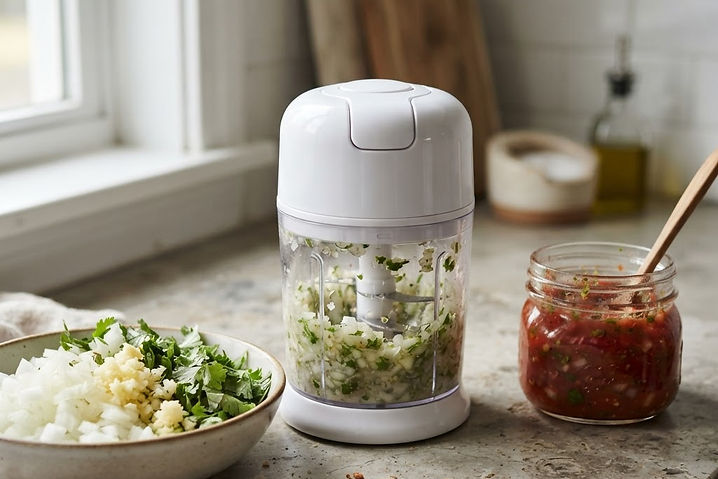
A small processor is quicker to get out, use and wash for everyday jobs
7. Russell Hobbs Desire: best budget full size processor
If you want a full size processor and a blender for the least money, the Russell Hobbs Desire is good value. It has a 600W motor (900W peak), a 2.3 litre processor bowl and a 1.5 litre blender jug, with a slicing and shredding disc, a creaming disc and a dough blade. It has two speeds plus pulse, and the removable parts go in the dishwasher.
It doesn't have the finish or the precision of the more expensive machines, but for occasional use it does the basics well.
- Good for: occasional chopping, blending and simple doughs
- Watch out for: plastic build, and only two speeds
- Budget: budget
8. Robot-Coupe R 2: the professional's choice
This is the machine you'll find in many restaurant and hotel kitchens, including plenty I've worked in. The R 2 is a cutter mixer with a 2.9 litre brushed stainless steel bowl and a 550W induction motor running at 1500rpm, with a pulse function. Robot-Coupe lists its uses as emulsions and sauces, mincing meat and fish, chopping onions, herbs and spices, grinding nuts, chocolate and praline, and kneading dough.
The steel bowl and smooth blade are built for daily commercial use. You don't get slicing or grating discs with this model (other versions in the range add a vegetable slicer), and the price reflects catering equipment rather than home appliances. For most home cooks it's overkill. For private chefs, caterers and anyone cooking for big numbers often, it's the one to aim for.
- Good for: silky sauces, mousses, farces, nut butters and heavy daily use
- Watch out for: catering price, and this model has no slicing discs
- Budget: professional

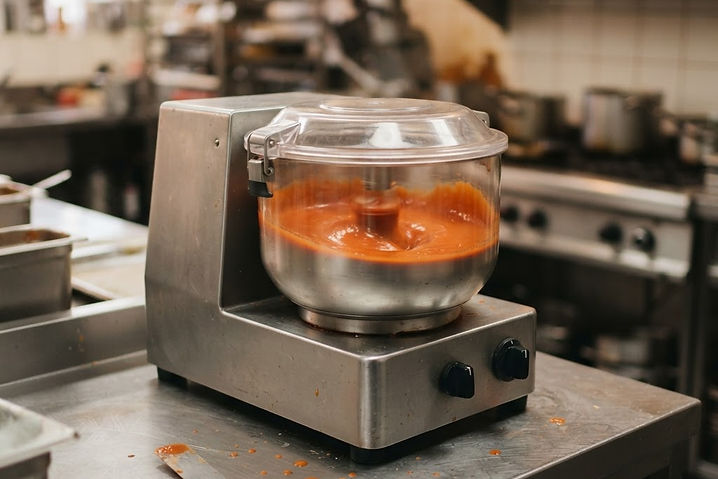
In professional kitchens a stainless steel bowl cutter does the heavy work
How to choose a food processor: what a chef looks for
Bowl size. Think about how many people you cook for. A 1 to 1.5 litre bowl suits one or two people and small jobs. A 3 litre bowl or bigger suits families, batch cooking and bread dough. Machines with nesting bowls, like the Magimix, give you both.
Motor and build. Wattage isn't everything, but a heavier, stable base matters for dough and thick mixtures. A light machine will walk across the worktop when you make pastry.
A pulse button. For chopping, pulse is the most important control. Short bursts give you an even chop. Running the motor continuously turns onions to purée.
Blades and discs. A sharp main blade, a slicing disc and a grating disc cover most cooking. Adjustable slicing and dicing kits are worth paying for if you do a lot of vegetable prep.
The feed chute. A wide chute means less trimming before you slice or grate.
Cleaning. Check which parts are dishwasher safe. If it's a pain to wash, you won't use it.
Storage. If it lives in a cupboard you'll use it less. Measure the space under your wall units before you buy a tall machine.

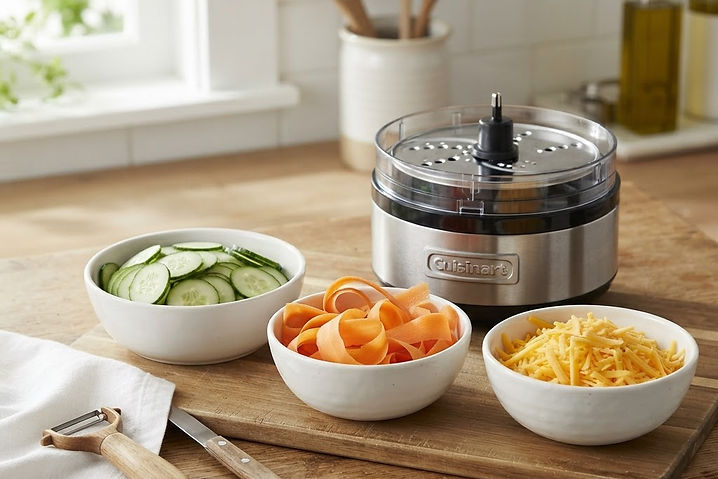
Slicing and grating discs are where a full size processor earns its place
What chefs actually use a food processor for
- Pastry: rubbing butter into flour in seconds keeps it cold, which gives you a shorter, flakier result. Try it with our shortcrust pastry recipe.
- Pastes and marinades: spice pastes, curry bases and jerk marinades, like the one in our Mobay sauce recipe.
- Pesto, salsa verde and herb oils: pulse rather than blend so they keep some texture.
- Breadcrumbs: blitz stale bread and freeze the crumbs for crumbing and gratins.
- Slaws and gratins: slice and grate a whole cabbage or a bag of potatoes in a minute.
- Purées and soups: a processor gives a rustic texture, while a blender gives a smoother finish, as in our mushroom soup without cream.
- Dinner party prep: when I'm cooking for twelve, a processor is what makes it possible to do the prep in a client's kitchen in an afternoon. For menu ideas, see our dinner party menu ideas.

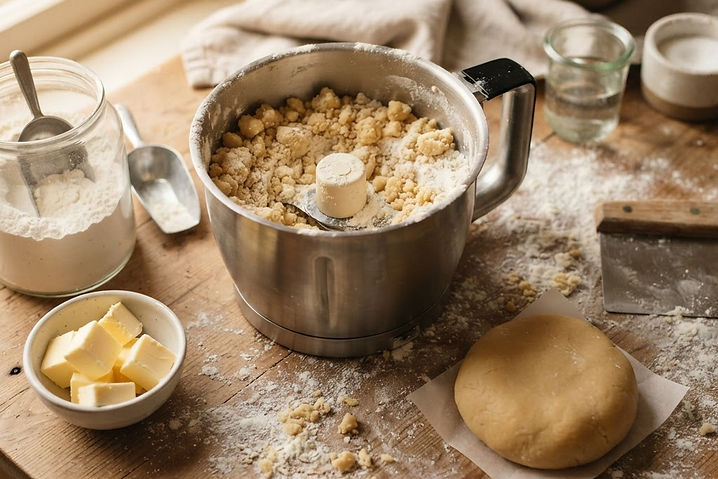
A food processor makes pastry quickly and keeps the butter cold
My recommendation
For most keen home cooks, the Magimix 4200XL is the one to buy: it's built to last, the nesting bowls cover small and large jobs, and the motor guarantee is the longest here. If you prep huge quantities of vegetables, the Sage Paradice 16 is worth the extra for its dicing. If space or budget is tight, the Kenwood MultiPro Go or Cuisinart FlexPrep will do most everyday jobs. And if you want one machine for smoothies and chopping, the Ninja is the most versatile.
Of course, the easiest way to enjoy restaurant level food at home is to let someone else do the chopping. If you're planning a special occasion, you can find a private chef near you on Private Chef Finder and contact them directly, with no booking fee.
Frequently Asked Questions
What is the top rated food processor in the UK?
For most home cooks, the Magimix 4200XL. It has a 950W motor, a 3 litre bowl with midi and mini bowls that nest inside, slicing and grating discs, a dough blade and a 30 year motor guarantee. The Sage Paradice 16 is a strong alternative if you want dicing.
What food processor do professional chefs use?
Many restaurant and hotel kitchens use Robot-Coupe machines, such as the R 2 cutter mixer, which has a 2.9 litre stainless steel bowl and a 550W induction motor. At home, many chefs use a Magimix.
What size food processor do I need?
A 1 to 1.5 litre bowl suits one or two people and small jobs like dips and herbs. For families, batch cooking, pastry and bread dough, choose a 3 litre bowl or larger. Nesting bowls give you both in one machine.
Is a food processor or a blender better?
They do different jobs. A food processor chops, slices, grates and makes pastry and dough. A blender makes smoother soups, sauces and smoothies. If you want both, a combination machine like the Ninja Detect Power Blender & Processor Pro covers both.
Is wattage important in a food processor?
It helps, but build quality matters as much. A heavy, stable base and a good motor handle dough and thick mixtures better than a light machine with a high wattage figure.
What is the best small food processor?
The Kenwood MultiPro Go, with a 650W motor and 1.3 litre bowl, is a capable compact processor with a slicing and grating disc. The Cuisinart FlexPrep 1.1L is smaller still and suits dips, dressings and breadcrumbs.
Can you make pastry in a food processor?
Yes, and it's one of the best uses for one. Pulse cold butter into flour until it looks like breadcrumbs, then add just enough cold water to bring it together. It's quicker than rubbing in by hand and keeps the butter cold.
The Magimix 4200XL is the best all rounder for most keen cooks, the Sage Paradice 16 is the one for dicing and big batches, the Kenwood MultiPro Go and Cuisinart FlexPrep suit small kitchens, and the Ninja covers blending too. And when you'd rather not do the chopping at all, find a private chef on Private Chef Finder and contact them directly, with no booking fee and no commission.
Plan it with a private chef
Browse private chefs by area, cuisine, budget and rating, and contact the ones whose cooking fits your occasion.
Continue reading


Guides
How to Hire a Private Chef in the UK: A Step-by-Step Guide
How to hire a private chef for a dinner party, a celebration or a day at home: where to find one, what to ask, how much it costs for a night or a day, and how to book a chef directly through Private Chef Finder.
4 November 2026 · 8 min read


Food & Cooking
Auguste Escoffier: The King of Chefs and the Father of the Modern Kitchen
Who Auguste Escoffier was, how he and César Ritz changed hotel dining at the Savoy and the Carlton in London, why his brigade system and five mother sauces still run professional kitchens, and the dishes he created.
3 November 2026 · 7 min read


Food & Cooking
Marie-Antoine Carême: The Story of the First Celebrity Chef
How an abandoned Paris child became the chef to Talleyrand, the Prince Regent and the Rothschilds, organised French sauces into the first mother sauces and is still remembered as the world's first celebrity chef.
3 November 2026 · 7 min read