Food & Cooking · 3 November 2026 · 7 min read
Auguste Escoffier: The King of Chefs and the Father of the Modern Kitchen
Who Auguste Escoffier was, how he and César Ritz changed hotel dining at the Savoy and the Carlton in London, why his brigade system and five mother sauces still run professional kitchens, and the dishes he created.
By James Callery, Private Chef and Head Chef, Hotel du Vin Winchester
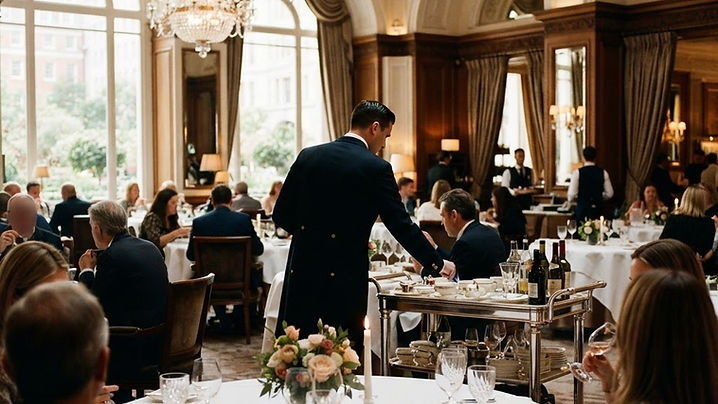
Walk into almost any professional kitchen in the world and you'll find Auguste Escoffier's influence: in the way the kitchen is organised into sections, in the sauces taught to every young chef and in the idea of ordering from an à la carte menu. Escoffier didn't just cook for the rich and famous of the Belle Époque. He changed how restaurant kitchens work, and many of his ideas have never been bettered.
Who was Auguste Escoffier?
Georges Auguste Escoffier was born on 28 October 1846 in Villeneuve-Loubet, near Nice. At the age of 12 he began his apprenticeship at his uncle's restaurant in Nice, and in his late teens he moved to Paris to work at Le Petit Moulin Rouge.
When the Franco-Prussian War broke out in 1870, he served as an army chef. The experience of feeding soldiers with limited supplies gave him a lasting interest in preserving food and in kitchen efficiency.

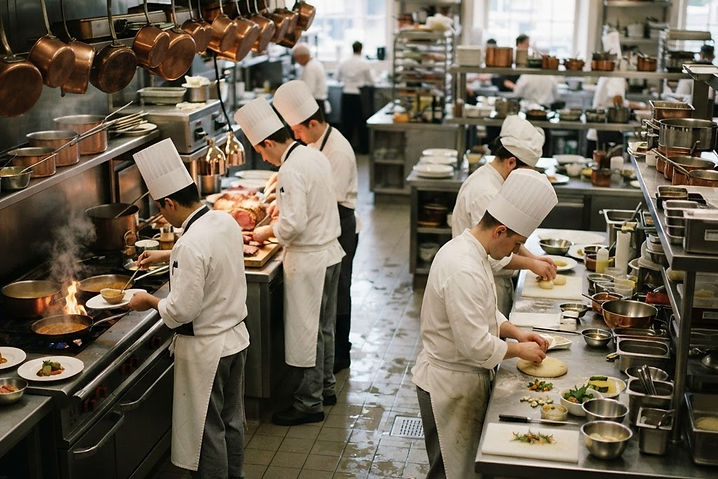
Escoffier's brigade system gave every section of the kitchen a specialist chef
Escoffier and César Ritz
In 1884, Escoffier began a partnership with the Swiss hotelier César Ritz that would transform luxury dining. Escoffier first ran the kitchens of the Grand Hotel in Monte Carlo, with Ritz managing the hotel.
In 1890 the pair were brought to London by Richard D'Oyly Carte to run the newly opened Savoy Hotel, where Escoffier directed the kitchens through the 1890s. Their time at the Savoy ended in a dispute with the owners in the late 1890s. They went on to open the Hôtel Ritz in Paris and, in 1899, the Carlton Hotel in London, where Escoffier ran the kitchens for more than twenty years.
Together, Ritz and Escoffier made fine dining in a hotel restaurant fashionable, including for women, at a time when dining out had largely been a male pursuit.
The brigade system
Escoffier's most practical legacy is the brigade de cuisine. Before him, large kitchens could be chaotic, with cooks preparing whole dishes from start to finish. Escoffier organised the kitchen into sections, each run by a specialist chef (de partie): sauces, fish, roasts, vegetables, cold food and pastry, all under a head chef. A single dish could be prepared by several sections at once and assembled at the pass, making service faster and more consistent.
The titles he used, from chef de cuisine and sous chef to chef de partie and commis, are still used in kitchens around the world, including in the UK.
The five mother sauces
Escoffier built on the work of Marie-Antoine Carême, who had organised French sauces into four families. Escoffier's list became the five mother sauces taught in catering colleges today:
- Béchamel, milk thickened with a white roux
- Velouté, a light stock thickened with a blond roux
- Espagnole, a rich brown sauce
- Sauce tomate, a tomato sauce
- Hollandaise, an emulsion of butter and egg yolks
Almost every classic French sauce is a variation on one of these. Our guide to how to make a cheese sauce starts with a béchamel.

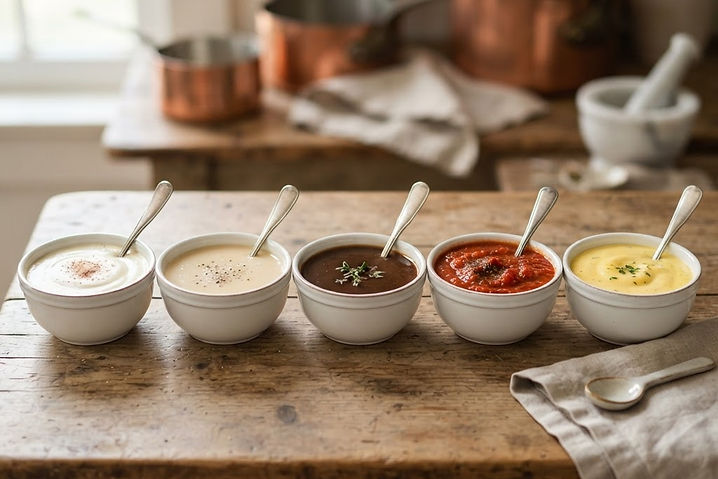
Béchamel, velouté, espagnole, tomato and hollandaise: Escoffier's five mother sauces
Simplifying French cooking
Escoffier admired Carême but simplified his style. He cut down on the elaborate garnishes and decorative excess of earlier grand cuisine, favoured lighter dishes and insisted that food should look like what it was. He also helped popularise the à la carte menu and service à la russe, with courses served one after another rather than all at once.
Dishes created by Escoffier
Escoffier named many dishes after the famous guests of the Savoy and the Carlton. The best known is peach Melba, created in 1893 for the Australian opera singer Nellie Melba: poached peaches with vanilla ice cream and raspberry purée. Melba toast is also linked to her name.

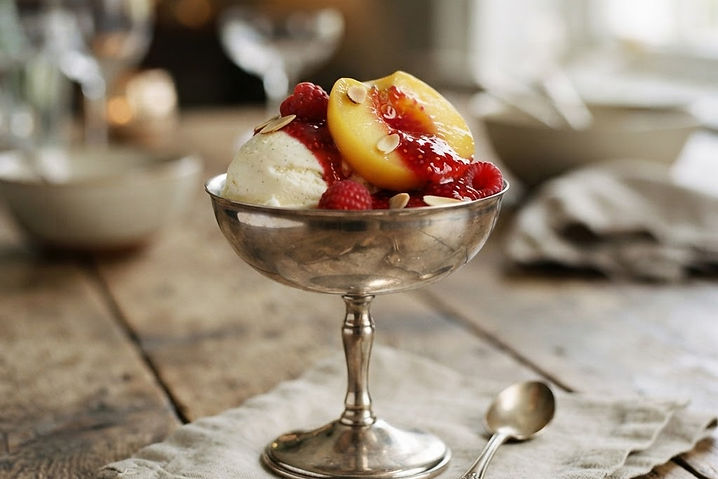
Peach Melba was created for the opera singer Nellie Melba
Escoffier's books
- Le Guide Culinaire (1903), written with Philéas Gilbert and Émile Fetu, with thousands of recipes, still used as a reference by professional chefs
- Le Livre des menus (1912), a guide to planning menus
- Ma Cuisine (1934), written for home cooks
Honours and later life
Escoffier was awarded the Légion d'honneur and in 1928 was made an officer of the order, a rare honour for a chef at the time. He retired after more than sixty years in kitchens, a career length few chefs have matched.
How did Auguste Escoffier die?
Escoffier died in Monte Carlo on 12 February 1935, aged 88, only weeks after the death of his wife, Delphine.

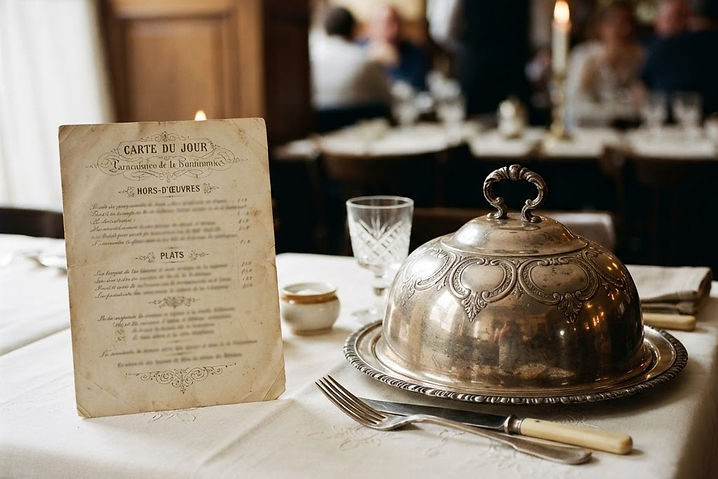
Escoffier helped popularise the à la carte menu
What is Auguste Escoffier known for?
In short:
- The brigade system, still the way professional kitchens are organised
- The five mother sauces, the basis of classical French sauce-making
- Le Guide Culinaire, one of the most important cookbooks ever written
- Modernising French cuisine, making it simpler and lighter
- Transforming hotel dining with César Ritz at the Savoy, the Ritz and the Carlton
- Dishes such as peach Melba
Today his name is carried by several organisations, including a culinary school in the United States and an international association of chefs, the Disciples d'Escoffier.
For more of the great names of French cooking, see our guide to famous French chefs.
Frequently Asked Questions
Who was Auguste Escoffier?
A French chef (1846 to 1935) known as the king of chefs. He ran the kitchens of the Savoy and the Carlton in London with César Ritz, created the brigade system and wrote Le Guide Culinaire.
What is Auguste Escoffier known for?
Organising kitchens into the brigade system, setting out the five mother sauces, simplifying French cooking, writing Le Guide Culinaire and creating dishes such as peach Melba.
What are Escoffier's five mother sauces?
Béchamel, velouté, espagnole, sauce tomate and hollandaise.
Where did Escoffier work in London?
At the Savoy Hotel, which he joined when it opened in 1890, and then at the Carlton Hotel from 1899, where he worked for more than twenty years.
What dishes did Escoffier create?
The most famous is peach Melba, created in 1893 for the opera singer Nellie Melba. He named many dishes after famous guests of his hotels.
How did Auguste Escoffier die?
He died in Monte Carlo on 12 February 1935, aged 88, a few weeks after the death of his wife.
Is the Auguste Escoffier School of Culinary Arts linked to him?
It is a culinary school in the United States that carries his name. Escoffier himself died in 1935 and did not found it.
Auguste Escoffier gave the professional kitchen its structure, its sauces and its language, and every chef working today owes him something. If you'd like classic French cooking served at your own table, find a private chef near you.
Plan it with a private chef
Browse private chefs by area, cuisine, budget and rating, and contact the ones whose cooking fits your occasion.
Continue reading

Food & Cooking
Marie-Antoine Carême: The Story of the First Celebrity Chef
How an abandoned Paris child became the chef to Talleyrand, the Prince Regent and the Rothschilds, organised French sauces into the first mother sauces and is still remembered as the world's first celebrity chef.
3 November 2026 · 7 min read

Food & Cooking
Famous French Chefs: 17 Chefs Who Shaped the Way We Eat
From Carême and Escoffier to Paul Bocuse, Joël Robuchon and Anne-Sophie Pic, the famous French chefs who defined fine dining, plus the French chefs who changed restaurants in Britain.
1 November 2026 · 8 min read

Food & Cooking
What Is Slow Churned Ice Cream? How It Works and How It Compares
Slow churned ice cream is a lighter ice cream made with a cold, slow churning process that makes it taste richer than its fat content suggests. Here's how it works, how it differs from regular and double churned ice cream, and how to make silky ice cream at home.
30 October 2026 · 7 min read