Guides · 1 November 2026 · 8 min read
Private Chef Insurance in the UK: What Cover Do You Need?
A plain guide to insurance for private chefs in the UK: which cover is a legal requirement, which is sensible to have, what each policy does and what to ask an insurer or broker before you buy.
By James Callery, Private Chef and Head Chef, Hotel du Vin Winchester
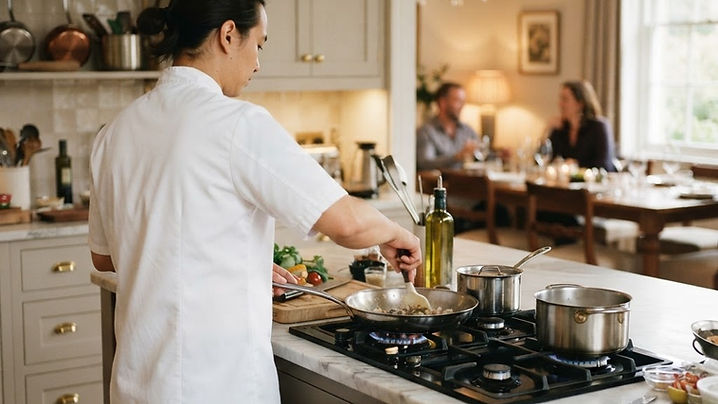
When you cook in someone else's home, you take on risks a restaurant chef never thinks about. You're working in an unfamiliar kitchen, carrying your own equipment, serving food to guests you've never met and driving between jobs. Insurance is how most private chefs protect themselves if something goes wrong.
This guide explains the main types of cover private chefs use in the UK, which ones the law requires and which are simply sensible, and what to ask before you buy. It's general information rather than advice: every business is different, so speak to an insurer or a broker about your own circumstances.
Is insurance a legal requirement for private chefs?
For most self-employed private chefs working alone, no single type of business insurance is compulsory. As Simply Business explains, public liability insurance is optional and not a legal requirement, though it's worth serious consideration if you deal with the public or work at clients' premises.
There is one important exception. If you employ anyone, even part time, you're legally required to have employers' liability insurance from the day you become an employer (more on that below).
Separately from insurance, if you cook, store, prepare or sell food you must register as a food business with your local council at least 28 days before you start trading, as set out by the Food Standards Agency. Our guide to how to become a private chef covers registration and the other setting-up steps.
The main types of cover for private chefs
| Type of cover | What it's for | Legally required? |
|---|---|---|
| Public liability | Injury to clients or guests, or damage to their property, caused by your work | No, but widely held |
| Product liability | Claims linked to the food you supply, such as illness | No, often sold with public liability |
| Employers' liability | Claims from your own staff who are injured or fall ill because of their work | Yes, as soon as you employ someone |
| Equipment or tools cover | Loss, theft or damage to your own kit | No |
| Business use on your car insurance | Driving to clients' homes and suppliers | You must be insured for the way you use your car |
| Professional indemnity | Claims about advice you give, such as menu or nutrition consultancy | No, only relevant for some chefs |


Cooking in clients' homes means working around their guests and their property
Public liability insurance
Public liability insurance covers you if a member of the public, such as your client or one of their guests, is injured or their property is damaged because of your work, and they claim against you. For a private chef, that might be a guest who slips on a spill in the kitchen, or a client's worktop or floor damaged by a hot pan.
It isn't a legal requirement, but it's the policy most private chefs consider essential, because you're working on other people's premises every time. Some venues, event organisers, agencies and corporate clients ask to see proof of cover before they'll book you, and some contracts specify a minimum level. Simply Business notes that some contracts, particularly in the public sector, may ask for £5 million or £10 million.
Product liability insurance
Product liability insurance covers claims arising from a product you supply. For a chef, the product is the food. If a guest claimed that a dish you made caused illness or an allergic reaction, product liability is the policy designed to respond. It's often sold together with public liability.
Insurance is no substitute for careful practice, though. Ask every client about allergies and intolerances when they book, confirm them in writing, keep your ingredient labels and follow good food hygiene. The Food Standards Agency's allergen guidance sets out what food businesses must be able to tell customers about the fourteen major allergens.
Employers' liability insurance
This is the one that's compulsory. According to GOV.UK, you must get employers' liability insurance as soon as you become an employer, with at least £5 million of cover from an authorised insurer. You can be fined £2,500 for every day you're not properly insured, and £1,000 if you don't display your certificate where employees can see it or refuse to show it to inspectors. There are limited exemptions, for example for some family members, so check GOV.UK if you're unsure.
For private chefs, this matters the moment you bring in a second pair of hands: a kitchen assistant for a big party, waiting staff for a wedding or a sous chef for a busy weekend. Whether those people count as employees can depend on how they're engaged, so ask an insurer or an accountant if you're not sure.

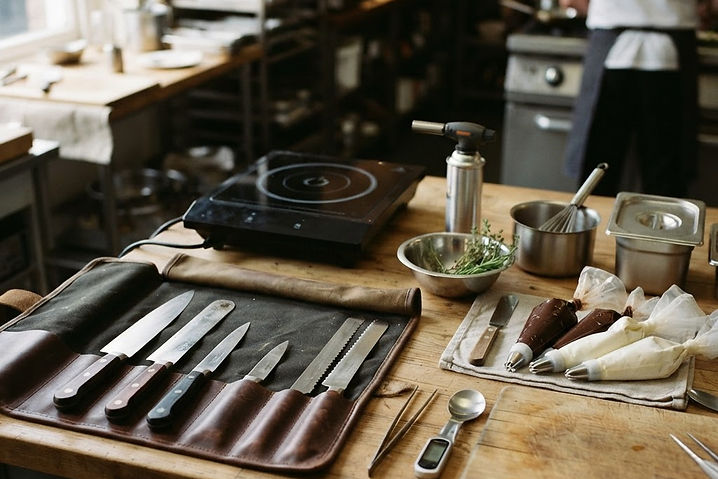
Your own kit is valuable, and a home insurance policy may not cover it for business use
Equipment and tools cover
Most private chefs carry their own knives, pans, portable hobs, blowtorches and serving equipment from job to job. Equipment or tools cover protects them against loss, theft or accidental damage, including while they're in your car or at a client's home. Don't assume your home contents insurance will cover kit you use for work: check with your insurer.
Car insurance for business use
If you drive to clients' homes, suppliers or venues, your car insurance needs to cover that use. Ageas explains that a standard social, domestic and pleasure policy doesn't cover driving for work, and that business use covers driving related to your job, such as travelling to different sites and meetings away from your main workplace. Using your car on the wrong class of use can invalidate your policy, so tell your insurer as soon as you start using your car for your business, not just at renewal.

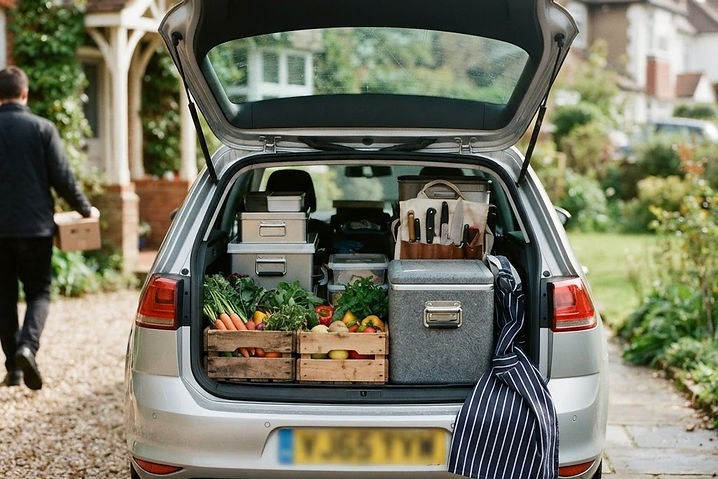
Driving to clients with ingredients and kit usually needs business use cover
Professional indemnity insurance
Professional indemnity covers claims that advice or a professional service you provided caused a client a financial loss. Most private chefs who simply cook don't need it, but it can be relevant if you also offer paid services such as menu development, recipe writing for businesses or nutrition consultancy. Ask an insurer whether it applies to what you do.
What affects the cost of private chef insurance
Insurers set prices individually, so the only way to know what you'll pay is to get quotes. The price usually depends on:
- The level of cover you choose, for example how many millions of pounds of public liability
- Your turnover and the number of events you do
- Whether you employ staff, and how many
- The type of work, such as dinner parties, large events or catering at venues
- The value of your equipment
- Your claims history
- Your excess, the amount you pay towards any claim yourself
Questions to ask an insurer or broker
- Does the policy cover cooking in clients' homes, holiday lets and outdoor venues?
- Are claims about food, including allergic reactions, covered, and are there any exclusions?
- What level of public liability cover do the venues and clients I work with usually ask for?
- Is my equipment covered in transit and at clients' homes?
- If I take on staff for one event, when do I need employers' liability, and how quickly can I add it?
- Do I need business use on my car insurance, and is my car insurer aware of it?
- Is cover based on claims made or on incidents that happen while the policy is active?
You can check that an insurer is authorised on the Financial Conduct Authority register, and a broker can compare policies from several insurers for you.


Keep your insurance documents, food business registration and allergen records together
Running a private chef business with confidence
Insurance is one part of running a professional private chef business, alongside food business registration, food hygiene, allergen records and clear booking terms. For the full set-up, read how to become a private chef, and for what the work pays, see how much private chefs make.
Frequently Asked Questions
Do private chefs need insurance in the UK?
Most self-employed private chefs working alone aren't legally required to have business insurance, but most choose public liability and product liability cover because they work in clients' homes and serve food to guests. Employers' liability is a legal requirement as soon as you employ anyone.
What insurance does a private chef need?
The most common cover is public liability and product liability. Chefs who employ staff must have employers' liability. Many also take out equipment cover and make sure their car insurance includes business use. Some need professional indemnity if they offer consultancy.
Is public liability insurance a legal requirement?
No. Public liability insurance isn't compulsory in the UK, but some venues, agencies and clients ask for it, and some contracts specify a minimum level of cover.
How much employers' liability cover do I need?
GOV.UK says employers must have at least £5 million of employers' liability cover from an authorised insurer, from the day they become an employer.
Does my car insurance cover driving to clients?
Not necessarily. A social, domestic and pleasure policy doesn't usually cover driving for work. Check that your policy includes business use and tell your insurer if your use changes.
How much does private chef insurance cost?
It depends on the cover you choose, your turnover, whether you employ staff, the value of your equipment and your claims history. Get quotes from a few authorised insurers or ask a broker to compare them.
Most solo private chefs aren't legally required to have insurance, but public and product liability are the cover most rely on, employers' liability is compulsory as soon as you take on staff, and your car insurance needs to match how you work. Get quotes from authorised insurers or a broker who understands catering. Once you're set up, join Private Chef Finder for free: clients contact you directly and we take no commission.
Plan it with a private chef
Browse private chefs by area, cuisine, budget and rating, and contact the ones whose cooking fits your occasion.
Continue reading

Guides
How to Hire a Private Chef in the UK: A Step-by-Step Guide
How to hire a private chef for a dinner party, a celebration or a day at home: where to find one, what to ask, how much it costs for a night or a day, and how to book a chef directly through Private Chef Finder.
4 November 2026 · 8 min read

Guides
How Much Do Private Chefs Make in the UK? Salaries, Day Rates and Earnings
What private chefs earn in the UK in 2026, from freelance day rates and per-head prices to household salaries, with what affects pay and how private chefs compare with restaurant chefs.
1 November 2026 · 8 min read

Guides
Private Dining at Home: How It Works, What It Costs and How to Plan It
Private dining at home means a professional chef cooks a restaurant-quality meal in your own kitchen and serves it at your table. Here's how it works, what it costs in the UK, what your kitchen needs and how to find a private dining chef near you.
29 October 2026 · 8 min read