Dinner Parties · 27 October 2026 · 8 min read
How to Host a Dinner Party: From Menu to Final Course
A practical plan for hosting a dinner party at home, with a timeline from a week out to the final course, and advice our co-founder, chef James Callery, has shared in the press.
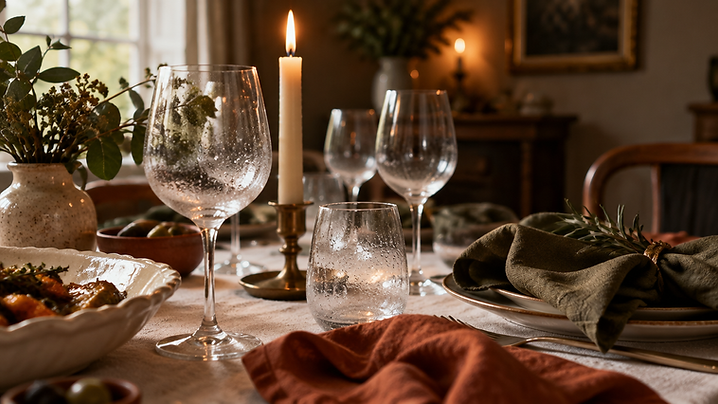
A good dinner party isn't about cooking the most impressive food you can. It's about a table of people who are enjoying themselves, and a host who gets to join them. Almost every hosting disaster comes from the same place: trying to do too much on the night.
This guide walks through hosting a dinner party at home step by step, from the guest list to the last course, with a timeline you can follow and the mistakes worth avoiding. Along the way we've included advice our co-founder, professional chef James Callery, has given in the press.
1. Choose the right number of guests
Six to eight is the sweet spot for most homes. It's enough people for the conversation to keep going on its own, small enough to seat round one table and manageable from one oven.
- Four: easy to cook for, but one quiet guest changes the whole evening.
- Six to eight: the classic dinner party, with one conversation or two and room for everyone.
- Ten or more: wonderful, but you'll need more space, more oven room and probably more help.
Count your chairs, plates, glasses and cutlery before you count your friends. It's a quick way to find your real limit.
2. Set the date and send the invitation
Give people time. James told Chowhound that around two to three weeks' notice is ideal: long enough for guests to clear their diaries, but not so long that they forget they said yes.
Keep the invitation simple: the date, the time you'd like people to arrive, the time you'll sit down, your address and anything they should know, such as parking or a dress code. A message is fine; a card is a nice touch for a special occasion.
3. Ask about dietary requirements early
Ask every guest about allergies, intolerances and diets when you invite them, not the week before. It changes what you cook. It's far easier to write a menu that works for everyone than to make a separate dish at the last minute.
For serious allergies, keep the ingredient packaging so you can check labels, and think about cross-contamination as you cook. If you're not confident, keep the whole menu free of the allergen rather than making one plate different.
4. Choose a menu you can actually cook
This is the decision that makes or breaks the evening. The best dinner party menus have three things in common:
- You've cooked every dish before. James's advice to Chowhound was blunt: the night of a dinner party is not the time to try a recipe for the first time.
- Most of it can be made ahead. Aim for at least two courses that are ready before the doorbell rings, such as a cold starter or a soup, and a dessert you made the day before.
- Quality beats quantity. Another of James's points: you're not running a hotel buffet. Three excellent courses are better than five stressful ones.
A slow-cooked main is a host's best friend: a braise, a roast shoulder or a tray of something in the oven gives you an hour or two of freedom while it cooks. Our dinner party menu ideas include five complete menus built on this principle.
5. Plan the drinks
Keep it simple. James suggested in the same piece that a welcome drink doesn't need to be complicated: one signature cocktail or a sparkling wine, plus a good non-alcoholic option, is plenty.
For wine, a standard 75cl bottle pours about six 125ml glasses. Many hosts plan roughly half a bottle per wine-drinking guest over a long dinner, plus a bottle or two in reserve. Chill whites and sparkling wine the day before, and have plenty of water on the table all evening.
6. Work out your quantities
Running out is stressful and cooking twice as much as you need is wasteful. As a starting point, a main course might use about 180 to 225g of boneless meat per person, and around 75g of dried pasta or rice, which is the main-meal portion Love Food Hate Waste recommends. Our guide to how much food per person covers every course, with a table for six, eight and ten guests.
7. Prepare the table
Lay the table the day before. It's one of the most satisfying jobs to get out of the way, and it shows up anything missing while there's time to borrow it.
- A tablecloth or runner, napkins and the right cutlery for each course, laid from the outside in.
- A water glass and a wine glass for each guest.
- Low flowers or candles that people can see over.
- Place cards if you'd like to decide who sits where. Mixing couples and putting a good talker at each end keeps the conversation moving.
8. Write a shopping list
Write the menu down, then list every ingredient by where you'll buy it: supermarket, butcher, fishmonger, greengrocer. Order anything special a few days ahead. Check your cupboards for the basics people forget: salt, olive oil, butter, ice, coffee, milk, kitchen roll and bin bags.
9. Make a preparation timeline
Work backwards from the moment you'll sit down. This is the single most useful thing you can do.
| When | What to do |
|---|---|
| One week before | Confirm numbers and dietary needs. Finalise the menu. Order anything special. Check you have enough plates, glasses and chairs. |
| Three days before | Do the big shop for everything that keeps. Buy the wine. Make anything that freezes well, such as stock or ice cream. |
| One day before | Buy fresh ingredients. Make dessert and any sauces or dressings. Prepare vegetables that keep. Lay the table and chill the drinks. |
| On the morning | Make the starter if it's cold. Prepare anything left. Tidy the kitchen and empty the dishwasher, so you start the evening with an empty one. |
| Two hours before | Put slow-cooked dishes in the oven. Set out canapés or nibbles. Get yourself ready. |
| 30 minutes before | Open the red wine, light the candles, put on some music and pour yourself a small drink. |
| During the evening | Finish the main course while guests have drinks. Clear each course before bringing the next. Leave the washing up until tomorrow. |
10. Plan the arrival and first drinks
The first twenty minutes set the tone. Have a drink ready to hand to each guest as they arrive, something small to eat, and the oven doing the work. If you've planned well, you can be in the room rather than at the stove.
Allow about half an hour to an hour between the arrival time and sitting down. Long enough for everyone to arrive and relax, short enough that nobody is hungry.
11. Time your courses
Don't rush. A relaxed dinner party for six to eight with three courses usually takes two and a half to three hours at the table. Leave a pause between courses so you can sit down and talk, and serve dessert when the conversation slows, not when the clock says so.
If a course is running late, top up glasses and bring out some bread or cheese. Nobody minds waiting at a good table.
12. Avoid the common hosting mistakes
- Cooking something new on the night. Practise first, or choose something you know.
- Assuming everything will go to plan. James's first rule for dinner parties, as he put it to Chowhound, is to assume something will go wrong; his second is to carry on as if you meant it. Have a plan B: a spare dessert in the freezer, a good cheese, an extra bottle.
- Too many courses. Two or three good ones beat five rushed ones.
- Leaving everything to the last minute. If more than one dish needs your attention in the final half hour, simplify the menu.
- Forgetting the host. If you're too busy to sit down, your guests will feel it.
13. Cook it yourself, or hire a private chef?
There's no wrong answer. Cooking for friends is one of life's pleasures, and with a good plan most people can host a lovely dinner party.
But if the occasion matters, or the menu is beyond what you'd like to cook, or you simply want to sit down with your guests, a private chef takes the cooking, the serving and the washing up off your hands. For a dinner party of six to eight, published UK prices run from about £65 to £120 per person depending on numbers, usually including ingredients and clearing up; our private chef cost guide has the details. Find out more about hiring a private chef for a dinner party.
Your dinner party checklist
- Guest list confirmed and chairs counted
- Invitations sent two to three weeks ahead
- Dietary requirements collected
- Menu chosen, with every dish cooked before
- At least two courses made ahead
- Shopping list written and specialist items ordered
- Drinks bought and chilled, including a non-alcoholic option
- Table laid the day before
- Timeline written and stuck to the fridge
- A plan B in the freezer
Frequently Asked Questions
How many guests should you invite to a dinner party?
Six to eight guests is ideal for most homes. It's enough for good conversation, small enough to seat round one table, and manageable to cook for with a domestic oven.
How far in advance should you invite people to a dinner party?
Around two to three weeks' notice is ideal. It gives guests time to clear their diaries without being so far ahead that the date gets forgotten.
How many courses should a dinner party have?
Three is the classic: a starter, a main course and a dessert. Two good courses and some cheese is plenty for a relaxed evening, and more than three is only worth it if you have help.
How long does a dinner party last?
Most dinner parties last three to four hours, with about half an hour to an hour of drinks before you sit down and two and a half to three hours at the table for three courses.
What should I serve that I can make ahead?
Cold starters, soups, slow-cooked mains such as braises and roast shoulders, and desserts like possets, tarts and chocolate pots can all be made in advance, leaving you free on the night.
How much wine do I need for a dinner party?
A 75cl bottle pours about six standard glasses. Many hosts plan roughly half a bottle per wine-drinking guest over a long dinner, plus a spare bottle or two and plenty of water.
The secret of a good dinner party is simple: plan early, cook what you know, do most of it ahead and sit down with your guests. And if you'd rather someone else did the cooking, find a private chef who fits.
Plan it with a private chef
Browse private chefs by area, cuisine, budget and rating, and contact the ones whose cooking fits your occasion.
Continue reading

Dinner Parties
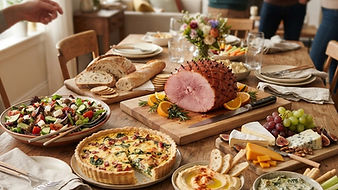
Buffet Menu Ideas for Parties at Home
Buffet menu ideas for birthdays, garden parties and Christmas gatherings at home: the best buffet items, hot and cold, four complete buffet menus, and how to plan quantities and set up the table.
28 October 2026 · 7 min read

Dinner Parties
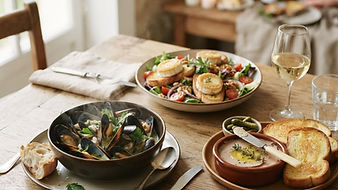
French Starters for a Dinner Party: 14 Classic Entrées
Fourteen classic French starters for a dinner party, from moules marinière and chicken liver parfait to leeks vinaigrette and twice-baked cheese soufflé, with what can be made ahead and an easy recipe to start with.
28 October 2026 · 8 min read

Dinner Parties
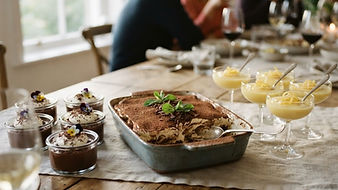
Dinner Party Desserts You Can Make Ahead
Twelve dinner party desserts that are made the day before or in the morning, from lemon posset and chocolate pots to pavlova and tarte tatin, with how far ahead each one can be made.
28 October 2026 · 7 min read